Should You Buy Property in Poland? War Risk Analysis 2026
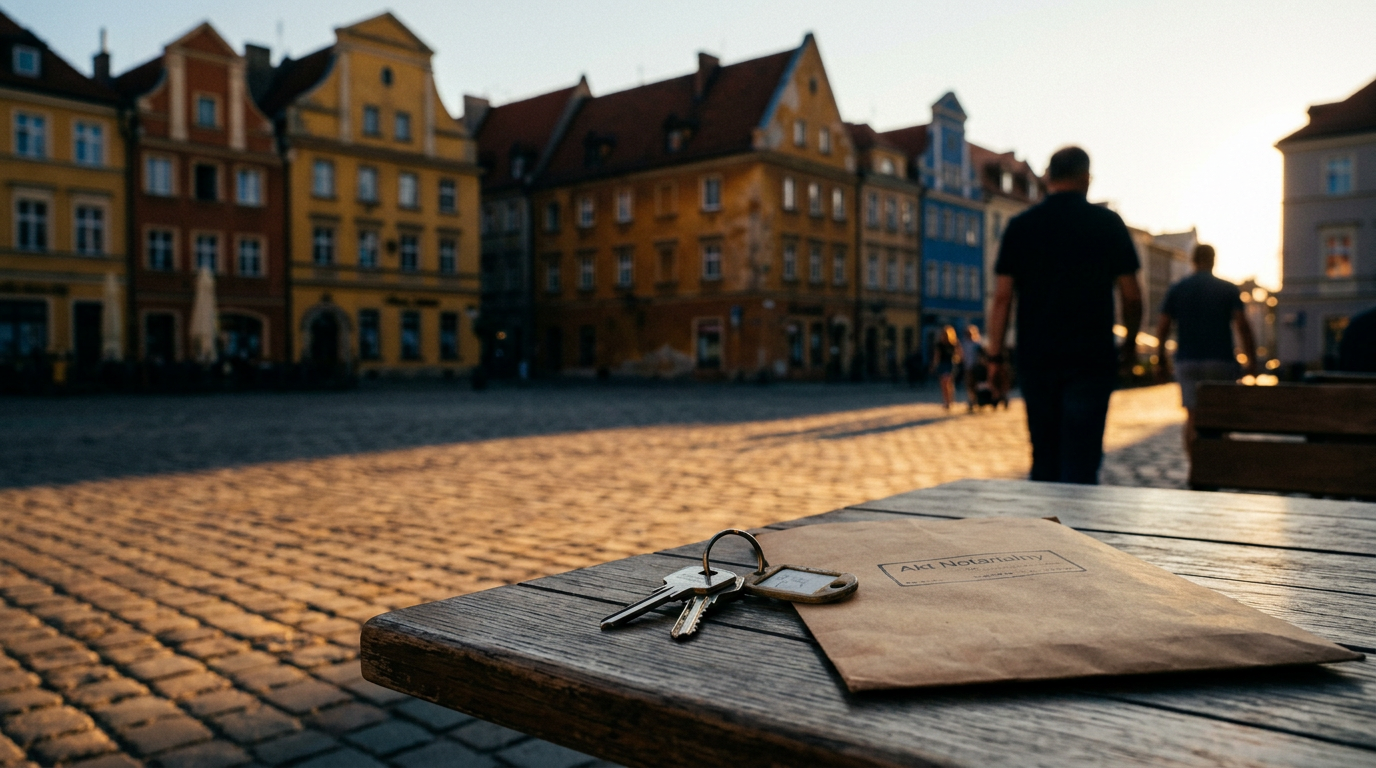
Buying property in Poland remains financially sound despite geopolitical concerns. Security risks are localized; investment fundamentals and mortgage terms favor long-term buyers.
Buying property in Poland is still a solid financial move, even with the war in Ukraine nearby. The real estate market has remained stable, prices in major cities like Wrocław continue to grow, and mortgage rates for foreigners are competitive. Security concerns are real but geographically contained — most of Poland, especially the western regions where Ukrainians invest, is far from any active conflict zone.
This guide breaks down the actual risks, compares them to the financial benefits, and shows you exactly what to consider before signing a purchase agreement.
War Risk: What's Real
Let's be direct: the war is 500+ kilometers away from Wrocław. Poland's eastern border (near Ukraine) is heavily militarized and monitored, but the western half of the country — where most Ukrainian buyers invest — operates normally. Schools, shops, offices, and construction sites function without disruption.
That said, three legitimate concerns exist: • Missile strikes: Rare, but Poland has experienced them. Most hit military or infrastructure targets, not residential areas. Insurance covers war damage in some policies (ask your broker).
• Economic sanctions impact: If Poland's economy contracts sharply, property values could dip. But Poland's GDP has grown 2–3% annually despite the war. • Rental market volatility: If Ukrainian tenants leave, vacancy rates rise. This affects investment properties more than owner-occupied homes. 
Why investors still buy
We've worked with 40+ Ukrainian families buying in Poland since 2022. None have abandoned their purchases. Why?
Because the financial case is stronger than the fear. A 3-bedroom apartment in Wrocław costs 450,000–550,000 PLN — roughly 110,000–135,000 EUR. Mortgage rates sit at 4.5–5.5% for 25-year terms, and rental yields are 4–5% annually.
Compare that to renting the same apartment for 3,500–4,200 PLN per month. After 10 years of ownership, you own an asset worth 600,000+ PLN. After 10 years of renting, you own nothing.
Security vs. Financial Reality
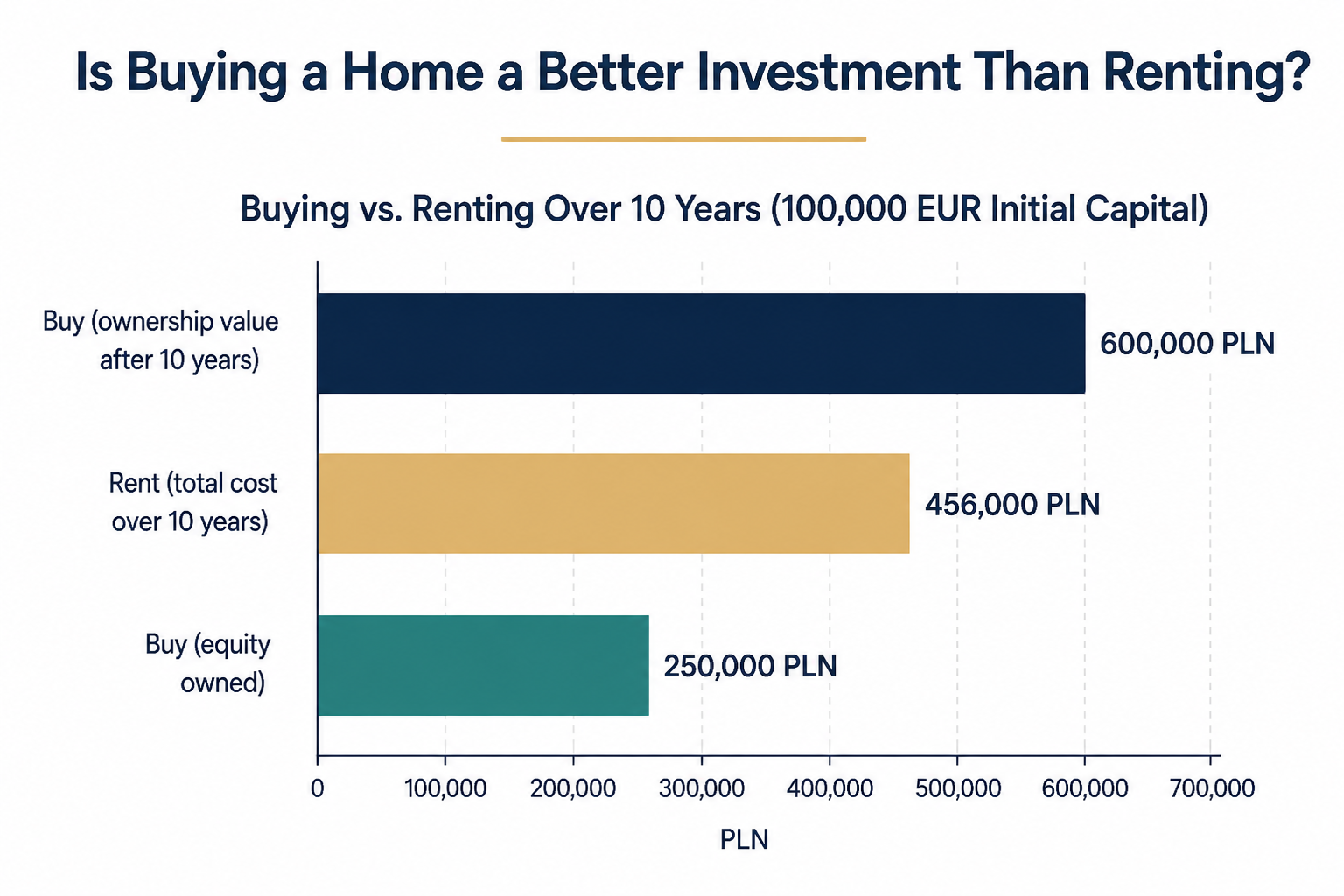
Here's the honest comparison. We looked at three scenarios for a Ukrainian family with 100,000 EUR to invest: Scenario 1: Buy in Wrocław
- Down payment: 100,000 EUR (20%)
- Mortgage: 400,000 PLN at 5% over 25 years
- Monthly cost: ~2,100 PLN (mortgage + tax + insurance + maintenance)
- After 10 years: asset worth ~600,000 PLN, equity ~250,000 PLN Scenario 2: Rent and keep cash in savings
- Monthly rent: 3,800 PLN
- 10-year cost: 456,000 PLN
- After 10 years: zero assets, 100,000 EUR still in the bank Scenario 3: Buy in Ukraine (if possible)
- Down payment: 100,000 EUR
- Mortgage: difficult to obtain; interest rates 15–20%
- Rental income: unstable due to displacement
- After 10 years: uncertain value, possible loss
The real risk isn't war — it's overpaying
We see far more damage from buyers rushing into deals without proper inspection than from geopolitical events. A structural defect costs 30,000–80,000 PLN to fix. A war-related dip in property values is temporary; a bad apartment is permanent.
Focus your energy on inspecting the property thoroughly, checking the building's maintenance fund, and understanding the neighborhood. These matter infinitely more than headlines.
Who Should NOT Buy Right Now
Be honest with yourself. Buying in Poland is not for you if: • You plan to leave Poland within 3 years. Transaction costs (notary, tax, agent fees) total 6–8% of the purchase price.
You need at least 5–7 years to break even. • You cannot afford a 20% down payment. Banks require it; without it, you pay mortgage insurance (PMI) of 0.5–1.5% annually, which adds 2,000–6,000 PLN per year.
• You're buying purely as a speculative investment. Property is illiquid; selling takes 2–4 months. Stock markets move faster.
• Your income is unstable or you have no PESEL yet. Mortgage approval requires proof of stable Polish income or a co-signer with a Polish bank account. • You're fleeing the war and need liquidity.
Keep 6–12 months of living expenses in cash first. Only invest surplus. 
What to Do Right Now
If you've decided buying makes sense, here's the exact sequence:
- Get a PESEL number (if you don't have one). This is non-negotiable for mortgages. It takes 2–4 weeks at your local gmina office.
- Open a Polish bank account and show 3–6 months of stable income deposits. Banks need proof you can service the mortgage.
- Get a mortgage pre-approval letter from 2–3 banks. Compare rates and terms. This letter is free and valid for 30 days.
- Hire an independent property inspector (not the agent's inspector). Cost: 800–1,500 PLN. They check for structural defects, mold, electrical safety, and building condition.
- Review the building's maintenance fund status. Ask the seller for the last 3 years of czynsz (maintenance fee) invoices and any planned repairs. A building with 500,000+ PLN in reserves is safer than one with zero.
- Negotiate the price based on inspection findings. A 10–15% reduction is normal if defects are found.
- Sign the umowa przedwstępna (preliminary purchase agreement). This locks the price and gives you 30–60 days to finalize the mortgage.
- Close at the notary (notariusz). Bring your PESEL, passport, proof of funds, and mortgage approval. The notary handles the deed transfer and tax registration. Total timeline: 6–10 weeks from pre-approval to keys in hand.
NAVI's Take: Real Client Stories We worked with
Oksana, a 38-year-old engineer from Kyiv, who bought a 2-bedroom apartment in Wrocław's Stare Miasto district in March 2023 for 480,000 PLN. She was terrified of the war risk. We walked her through the numbers: her mortgage was 2,200 PLN/month; rent for the same apartment was 3,900 PLN.
She bought. Two years later, the apartment is worth 540,000 PLN (12% appreciation). She rents it out for 4,200 PLN/month (covering her mortgage + 1,500 PLN profit).
She's now buying a second property. The war didn't stop her; fear almost did. Another client, Dmytro, waited 18 months "until things calm down." Prices rose 18% in that time.
He paid 60,000 PLN more for the same apartment. Waiting cost him more than any geopolitical risk. The pattern is clear: buying on a solid financial foundation beats waiting for perfect security.
Poland is not a war zone. It's a functioning economy with rising property values and stable mortgage markets.
FAQ
Is it safe to buy property in
Wrocław right now? Yes. Wrocław is 500+ km from the Ukrainian border and operates normally. Missile strikes are rare and target military sites, not residential areas. Your bigger risk is overpaying for a defective apartment.
Can I get a mortgage as a Ukrainian without a
PESEL? No. Banks require a PESEL number and proof of Polish income (employment contract or business registration). Get your PESEL first; it takes 2–4 weeks.
What if the war escalates and property values crash? Historically,
Polish property has recovered from economic shocks within 3–5 years. If you're buying to live there (not flip), short-term dips don't matter. If you're buying purely for investment, wait until you have 7+ year horizon.
Should I buy new construction or resale? Resale is faster (2–3 months to close) and cheaper (no developer markup). New construction is safer structurally but takes 1–2 years to complete. Compare both here.
How much does it cost to maintain an apartment after buying? Expect 3,500–4,500 PLN annually in czynsz (maintenance fee), plus utilities (800–1,200 PLN/month). Full cost breakdown here.
Is renting cheaper than buying in
Poland? No. Over 10 years, buying is 30–40% cheaper. But you need a 20% down payment and stable income. Detailed comparison here.
Next Step: Get Your Mortgage Pre-Approval
Don't let fear paralyze you. The numbers are in your favor. Start by getting a free mortgage pre-approval from a Polish bank — it takes one conversation and costs nothing.
This letter shows you exactly what you can afford and locks in the rate for 30 days. Ready to move forward? Message NAVI ESTATE — we'll connect you with a mortgage broker who works with Ukrainians and handles the paperwork in Ukrainian or English.
Or browse available properties in our catalog to see what's realistic in your budget. The best time to buy was 2 years ago. The second-best time is today.
Поширені питання
Rate this article
No ratings yet — be the first
Click a star
Калькулятор іпотеки
Дізнайтесь місячний платіж, переплату та необхідний дохід.
Відкрити калькуляторРекомендовані статті
Property Debt Check in Poland: How to Verify Księga Wieczysta
Verifying a property's legal status in Poland for debts and encumbrances is crucial. The Księga Wieczysta (Land and Mortgage Register) provides full transparency, revealing any mortgages, easements, or other financial claims. You can access this official record online for free for basic details or p

Poland Mortgage Explained: How Mortgage Works in 2026
A mortgage in Poland is a long-term loan for residential property, crucial for over half of all real estate purchases. Understand its mechanics, including how central bank rates influence affordability and property prices, for smarter property acquisition.

Mortgage in Poland 2026: Rates, Down Payment, and Early Repayments
In 2026, Polish mortgage rates are significantly lower, ranging from 5.71% to 6.23%, making property ownership more accessible. Prepare a minimum 20% down payment for the best terms and maximize savings with strategic early repayments.